
Why Reflection Matters More in DP2 Than It Did in DP1
When I was in DP1, reflection felt like something teachers asked us to do after every assignment. I understood how to reflect, but I wasn't sure why it mattered. Now, halfway through DP2, I think I finally have the answer.
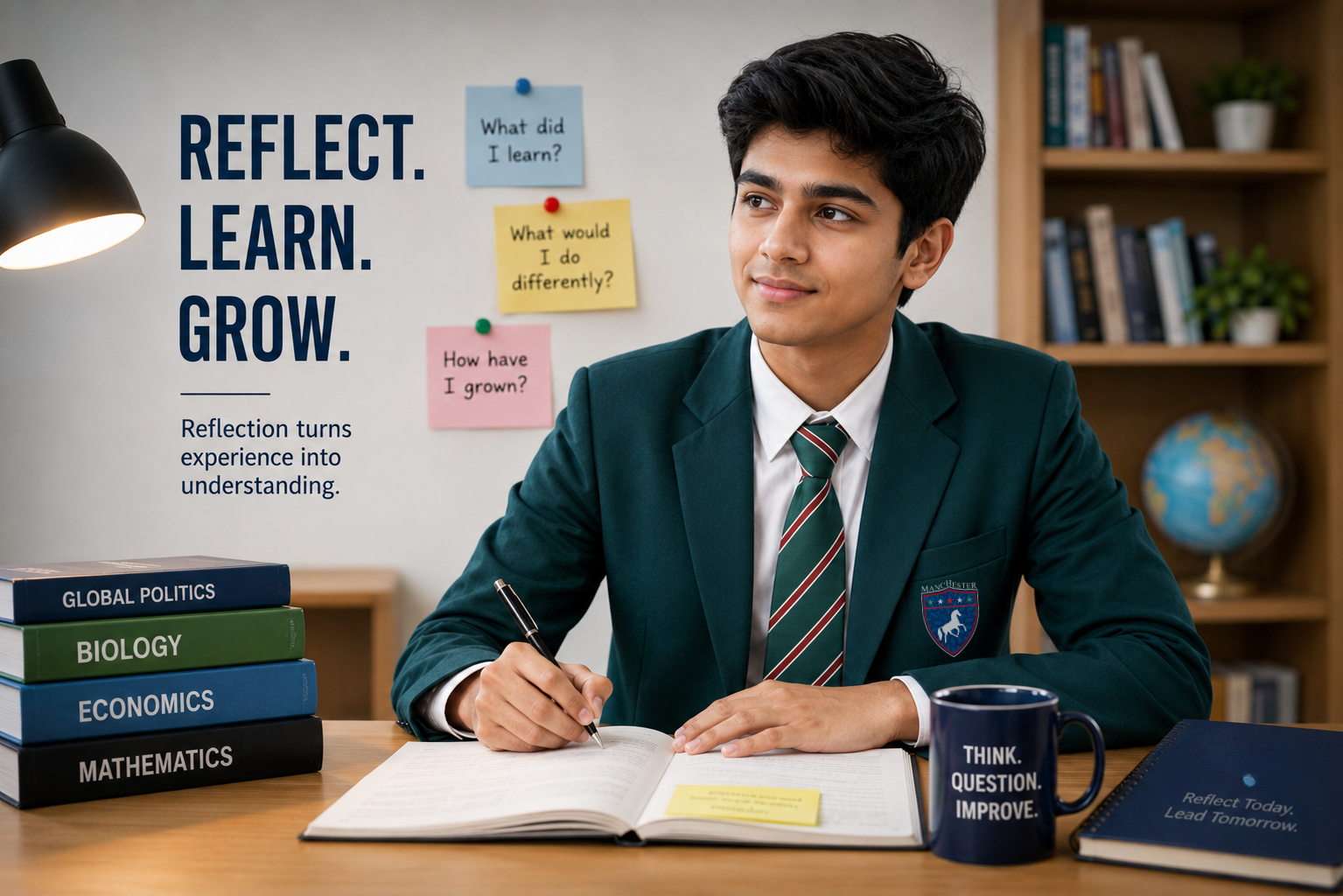
The IB doesn't ask us to reflect because it's part of the curriculum. It asks us to reflect because learning isn't complete until we understand how we've changed because of it. Somewhere between my first Internal Assessment and the final draft of my Extended Essay, something shifted. I stopped asking, "How many marks will I get?" and started asking, "Did this process make me think differently?" That change didn't happen overnight. It happened because the DP constantly asks us to revisit our own thinking. One of the most interesting things about the IB is that it rarely rewards the first answer. Whether it's in English, Global Politics, Biology, Economics, or Mathematics, we're encouraged to question our assumptions, justify our reasoning, and sometimes even challenge our own conclusions. Reflection becomes part of the way we think. I remember looking back at an essay I wrote early in DP1. At the time, I was proud of it. Reading it again a year later, I noticed arguments I would strengthen, evidence I would question, and perspectives I had completely overlooked. The essay hadn't changed. I had. That's probably the biggest lesson the DP teaches. Reflection isn't about looking back at our work. It's about recognising that we are no longer the same learner who produced it. The DP also changes the way we respond to feedback. In the beginning, comments from teachers often felt like corrections. Now, they feel like conversations. Instead of seeing feedback as criticism, I see it as another perspective—one that helps me think more deeply and improve my work. I've also realised that reflection has made me more comfortable with uncertainty. Not every research question has a clear answer. Not every discussion ends with agreement. Sometimes the strongest learning comes from sitting with ideas that are incomplete or even contradictory. The IB doesn't expect us to know everything. It expects us to think carefully about what we know and remain open to changing our minds. That habit has extended beyond the classroom. When I read the news, I find myself questioning sources instead of accepting headlines. During discussions, I listen more carefully before forming an opinion. When something doesn't go as planned, my first instinct is no longer frustration but curiosity. What can I learn from this? What could I do differently next time? Those questions have become almost automatic. Looking back now, I realise that reflection is one of the reasons the IB feels different from any other programme. It isn't simply about completing assessments or preparing for examinations. It is about becoming aware of how we learn, how we think, and how we continue to grow. Halfway through DP2, I still have exams ahead of me and important decisions to make. There is still so much to learn. But reflection has given me something equally valuable. It has shown me that education is not measured only by what I know today. It is measured by how willing I am to question, improve, and keep learning tomorrow. Perhaps that is the real purpose of reflection in the IB. Not to look back at the past, but to become more intentional about the person and learner we are becoming.
.jpg)
.jpg)